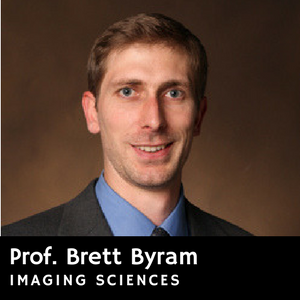
 “Ultrasound images are notoriously terrible,� that’s Professor Brett Byram, an assistant professor in biomedical engineering, and his work focuses on improving ultrasound images using big data analysis techniques. He depends on ACCRE for its file storage, access to GPUs, ability to process large jobs, and pre-installed access to Matlab. When he buys laptops for graduate students, he intentionally picks laptops with small hard drives so that they can depend on ACCRE as well.
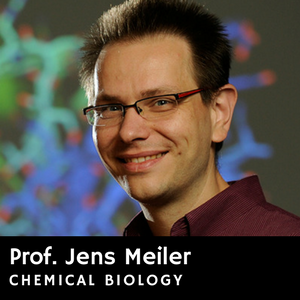 Jens Meiler is a professor at the ÌÇÐÄVlog¹Ù·½ Institute for Chemical Biology whose research spans over 50 projects in protein structure and folding, computer aided drug discovery, and protein therapeutics, all of whom rely on the ACCRE cluster. For Professor Meiler, the experimental research is driven by using ACCRE to simulate the interactions between tens of thousands of atoms in biological systems, a problem which includes going through billions of possible arrangements of atoms. “On my PC I could run it a thousand times and it would take half a year, on ACCRE I could run it a thousand times and it would take a day.â€� Professor Meiler works with many groups off campus, many of whom wish they could use ACCRE for their own research. Professor Meiler is also a member of the ACCRE Faculty Advisory Board and has helped secure NIH S10 shared instrumentation grants that fund a large number of ACCRE compute nodes.
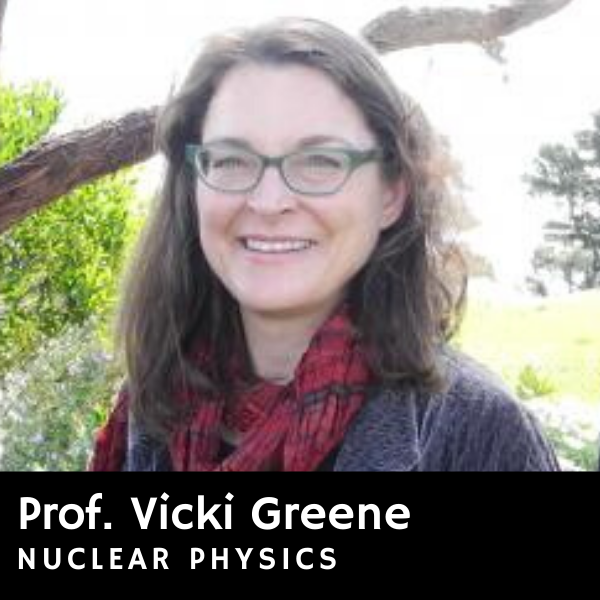 Professor Vicki Greene has been researching relativistic heavy ion physics at ÌÇÐÄVlog¹Ù·½ for 23 years, and has been involved in discussions with ACCRE since the very beginning. Her research focuses on the quark-gluon plasma, which is formed by colliding nuclei at close to the speed of light; heating it enough to melt not only the nucleus but the protons and neutrons inside, leaving only a soup of quarks and gluons. ÌÇÐÄVlog¹Ù·½ researchers contributed significantly to the discovery of the quark-gluon plasma in 2005. Nowadays, further research is being done to understand its properties as well as smaller systems for creating it, for instance, colliding a single proton with the nucleus instead of two nuclei together. Having the CMS Tier 2 center embedded at ACCRE provides a symbiotic relationship. Aside from the obvious hardware benefits (“I don’t have the computing power on my laptop, or a hard drive with 9 petabytes of storageâ€�, says Greene), Tier 2 also benefits from having ACCRE’s trusted support team ready to help. In return, the research group contributes new hardware to the system and helps to bolster ACCRE’s image. Another advantage that ACCRE provides is the ability to run data analysis on hardware that would otherwise go unused, a technique called job pre-emption. Much like a screensaver starts when the computer goes idle and stops when the mouse is moved, the cluster processes CMS data when the hardware goes idle and stops when it is needed for other purposes. By taking advantage of unused CPU cycles, the Tier 2 team can get more done without compromising access to other ACCRE users.